Reflections on a year of growing vegetables
I spent last year growing various vegetables in a small part of my garden…
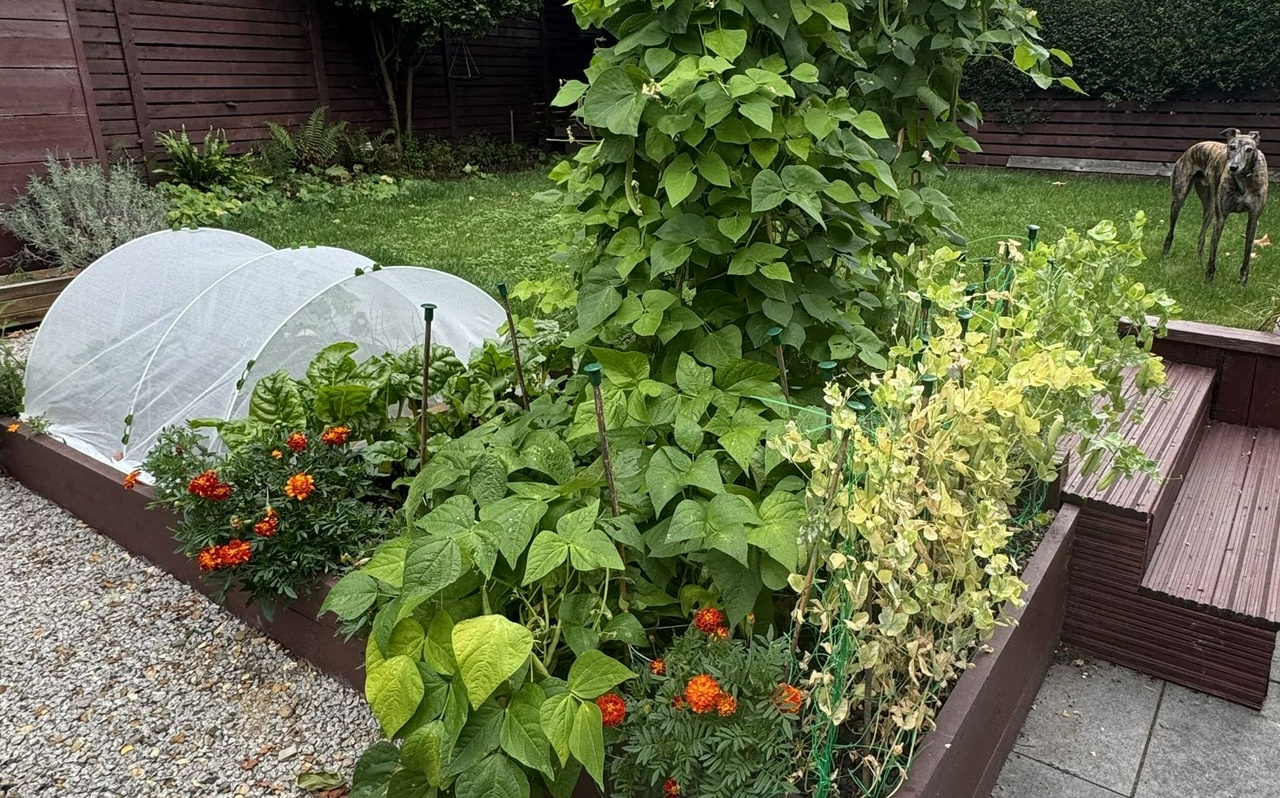
While largely successful, there was a lot to be learnt throughout the year. Since now’s when the new growing season is ramping up, it’s a good time to reflect back on that.
Overall the aim was to have a “no dig”, totally organic, self-contained approach, where the entire plot was productive all year and all space was maximised. I even had a spreadsheet of the plan…
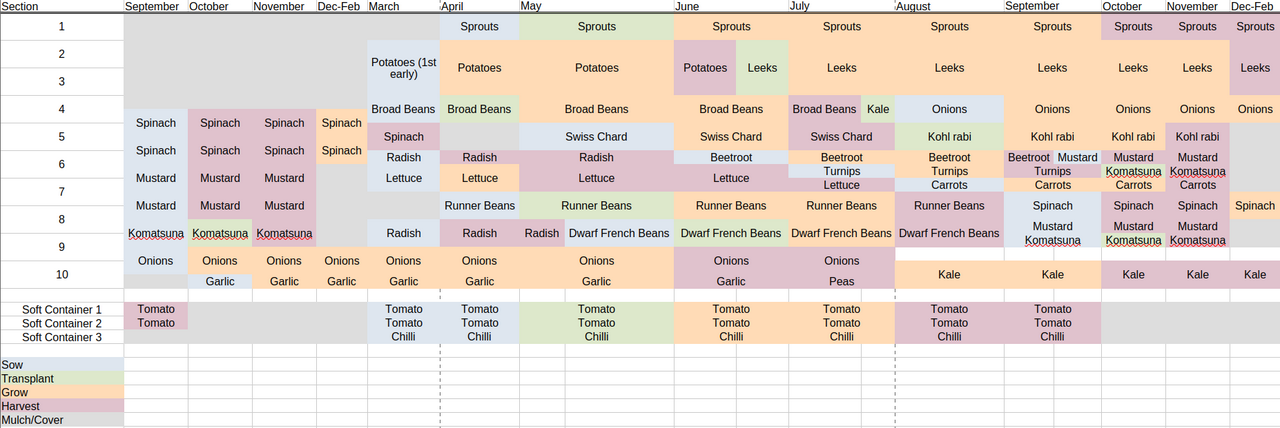
Quite the variety! (for context: this is UK, so a fairly short warm weather growing window during summer, and otherwise largely grey/damp/wet)
Mostly, as I said, it was a success, there were some failed crops along the way, but the space was easily filled in with other vegetables to the extent that it was as productive as could be hoped for in the UK climate.
The main learnings I would say are:
Probably too much variety
Growing too many of some things I didn’t actually enjoy eating, and too few things I do
Being quite rigid in terms of planning rows, spacing, and timing
Dealing with various pests (omg slugs, the endless onslaught of slugs, UK weather must be a paradise for them)
It’s probably worth going through each vegetable in turn just to say a few words and get my own thoughts down as I plan for this year.
The successes
Garlic
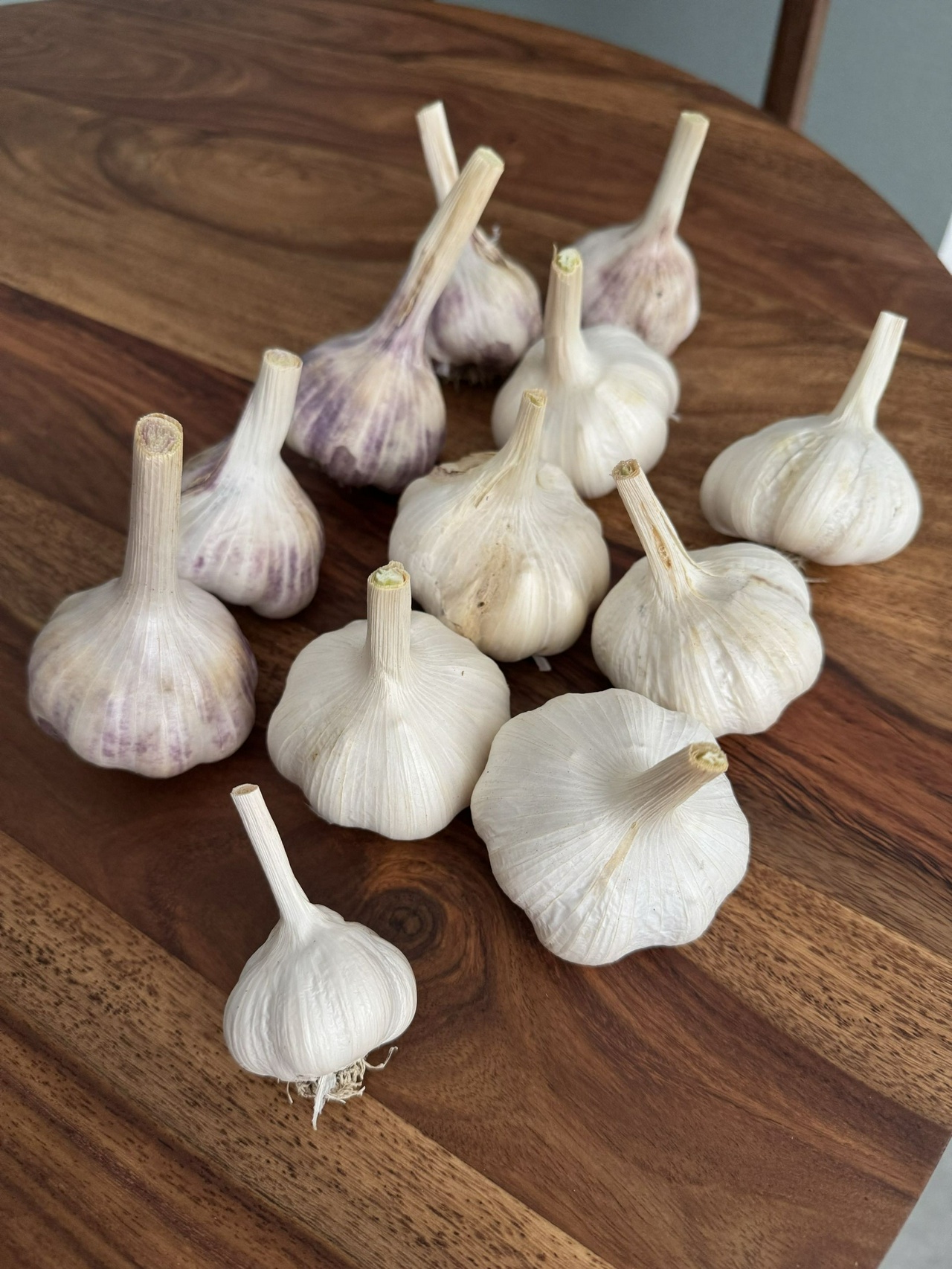
By far the number 1 easiest to grow, easiest to store, and most useful in cooking of anything I grew. Just push a clove into the ground in autumn and by summer next year you have garlic. I didn’t need to do anything at all to them, no additional watering, they managed themselves, no pest damage at all, no failed crops. I dried them out after harvest and they’ve essentially stored for an entire year. Not only that they can be easily replanted for next years harvest too.
Potatoes
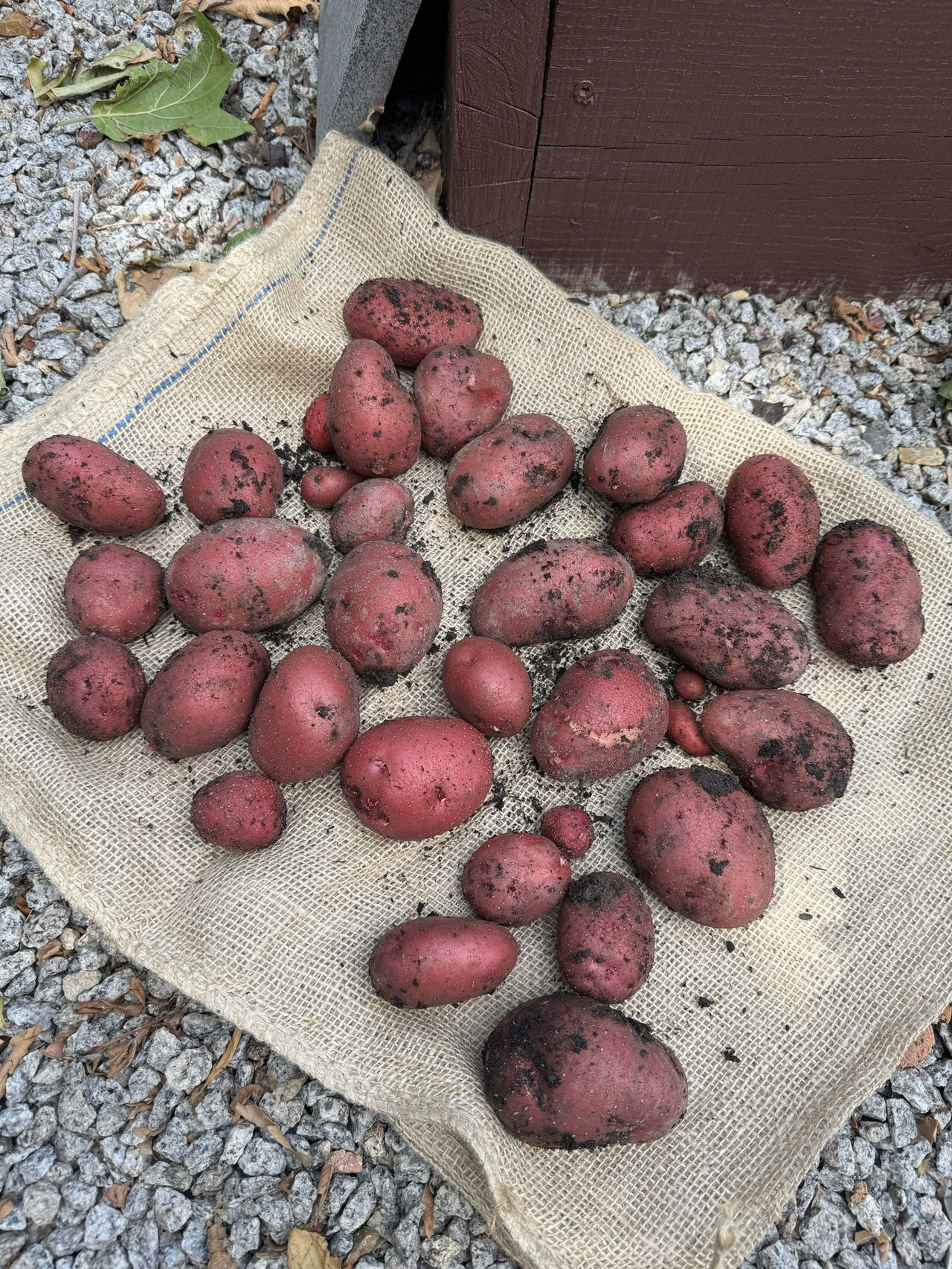
Another easy one, put the seed potato in the ground, wait some time, dig it up and you have lots more potatoes, no pests, no failed crops. These didn’t store as well after harvest as the garlic (though they did last maybe 5 months), though that’s probably a combination of not the best storage conditions, and them being 1st early varieties rather than main crop potatoes.
Runner Beans
Again easy to grow, no crop failures, no pest issues, and super super productive. I’m not a huge fan of runner beans cooking-wise, however I found out you can also just let them dry and store the seeds for cooking, they’re essentially cannellini beans. Much more enjoyable in casseroles (for me at least), especially during winter months! The only downside is they do require some support to grow up onto.
Dwarf French Beans
Another super easy to grow vegetable, and super quick to mature too. Push them into the ground, they pretty much all grew, zero pest issues, super productive. I grew a kidney bean variety so these were all dried for the beans only. Only downside is I wish I grew more tbh! These were one of my favourites of the year.
Peas
Again like the other beans, super easy to grow, no pests, no failed crops, and omg fresh peas are so sweet and tasty it’s unreal. And again the main downside is I didn’t grow enough. The one minor issue I did have is that what they need to grow on is a bit more annoying to setup/teardown than the large bamboo sticks used for the runner beans.
Kale
Honestly, wasn’t a big fan of kale to eat before growing it, however, it does seem to be pretty reliable throughout winter and early spring when everything else is dead. I found it’s also a lot more sweet home-grown than shop-bought, quite versatile in cooking, anywhere “greens” are required just use some kale. There were however some pest problems, particularly slugs and things laying eggs on the leaves, however once established they seemed pretty resiliant with no more ongoing maintenance required.
Leeks
A bit fiddly to grow initially, and take so so long to grow compared to everything else. However, once established, no maintenance required. It’s also one of the few things you can harvest in winter and the early months of the year, and like kale: super sweet fresh from the garden to eat, compared to shop-bought.
The things that were “ok”
Spinach / Mustard / Komatsuna / Radish / Lettuce / Beetroot
Slugs love all of these. If you can fight your way through slugs constantly eating the seedlings, plant enough and a few might survive, then you get something edible. If it weren’t for slugs, these would all be super easy to grow, there were no problems otherwise. The other reason I put these here is that I don’t think I enjoy eating these as much as some of the other vegetables above. I mean they’re not bad, and the beetroot was a particularly sweet and earthy highlight, but they’re not something that excites me to cook.
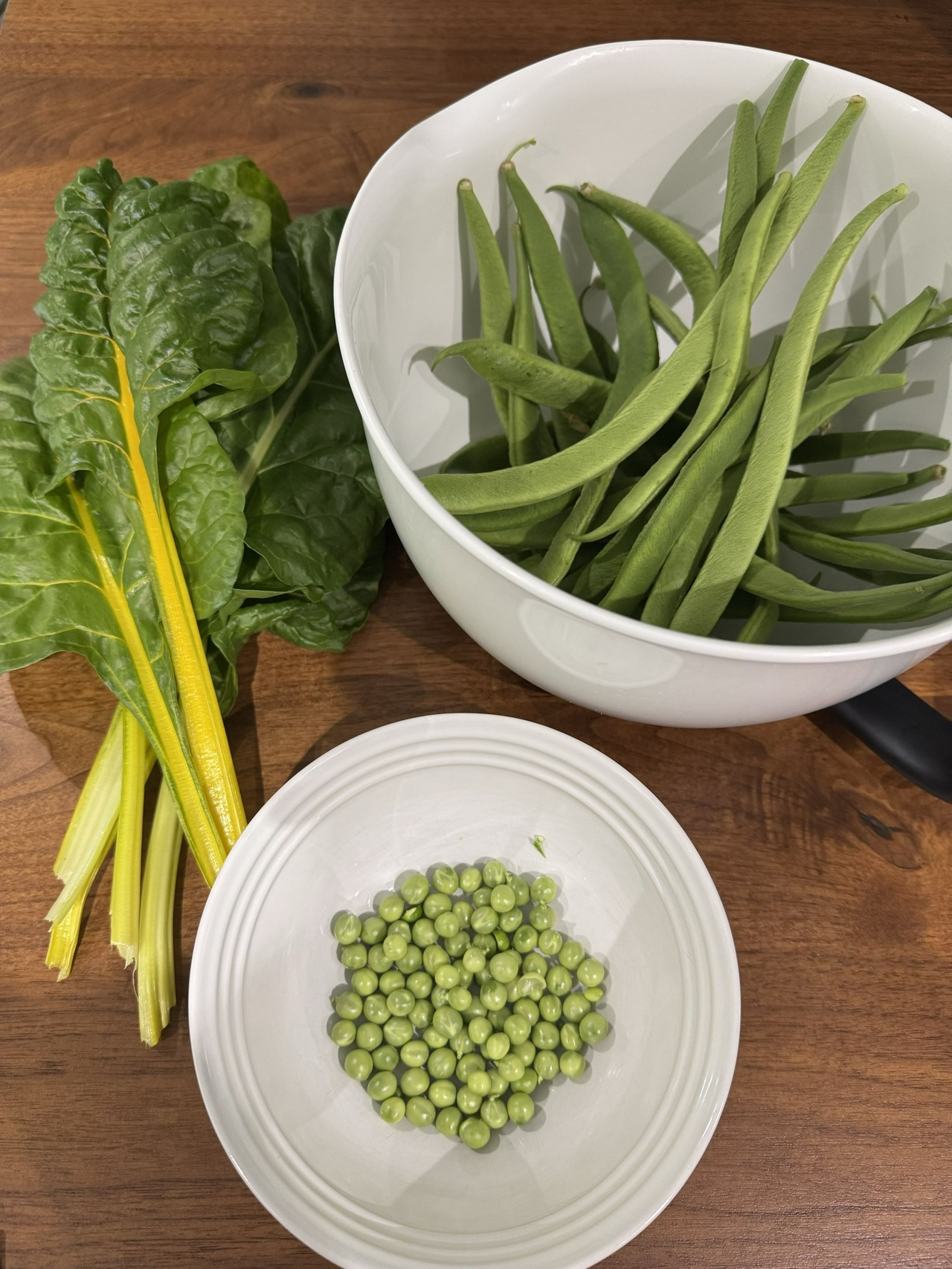
Swiss Chard
This had all the same problems as the above group, however I’m calling it out here on its own for two reasons:
Once established, it actually needed no maintenance at all, even during dry periods it was frequently the only thing that didn’t seem to need any water at all. It all also survived the entire winter (including minus temperatures and snow), I don’t think it was supposed to be this hardy.
Despite those positives, I would rank this as probably my least favourite thing to eat out of anything I grew. Chard is strange, I feel like it can’t be used as a replacement for spinach or kale in recipes, nor lettuce, and it has a kinda weird flavour. I can’t call it “unpleasant”, but something’s not right with it (it’s not even that it’s bitter, the kale or sprouts I grew are far more bitter, but taste far nicer). It also has a tendency to be a bit gloopy in texture compared to the other leaf related vegetables. Probably I’m not cooking it right or with the right things.
Tomatoes / Chilli
These are ok (and I’ve grown them for decades at this point). A bit of a pain to start from seed, but once growing they’re pretty easy to be honest. No real pest issues, and they just do their thing during summer. The only downside is I find that home grown tomatoes in the UK (only if you are growing them outside) tend to have a bit of a grainy/mushy texture instead of that crisp texture you get in high quality salad tomatoes. I’ve tried many different varieties, different watering methods over the years, and sometimes it’s less apparent, but still there. I think unless you have a greenhouse or polytunnel, the outdoor UK climate is sub-optimal. Chillies however don’t have this problem. The only downside with chillies though is purely the length of the growing season, sometimes they don’t reach full maturity within our summer… we ideally need an extra month. Flavour-wise though, I find chillies work pretty well outside in the UK.
The total failures
Onions
Omg, why are onions so difficult to grow from seed. I wanted to avoid growing from sets because I saw that as “cheating”, however I think I can see why they’re sold as sets. They’re such weakling things when they first grow, like a single limp blade of grass that stays like that for months no matter how much nursing you give them. Half of them didn’t make it past seedling stage for me, and then the ones that did never seemed to get particularly big or strong. I did have a handful reach the stage where I could harvest them (at a size somewhere above a golf-ball but below a tennis-ball), however they were all infested with allium leaf miner, so I had to put them all into compost. T_T I suspect this could be solved by covering them with netting during the growing period. Either way, super frustrating to grow (from seed at least), and pest damage was devastating.
Brussels Sprouts
I think this is probably my fault, I grew some from seed, got them ready to put outside, then a million aphids ate them. Grew some more (however at this point it was a few weeks late to start them), and transplanted them, then the army of caterpillars started eating them. With some netting and manually picking things off I managed to save them, however, I think because this stunted their growth, and they already started a few weeks late… they didn’t really grow particularly big, and I didn’t get any fully formed sprouts from them. I was able to at least eat the leaf tops/stems like a sprouting broccoli, but not exactly what I was hoping for when I planted them.
Turnips / Carrots / Kohlrabi
They all got eaten by slugs, all of them. I even tried multiple times, tried starting them elsewhere and transplanting, tried a full war on eliminating slugs, but no, they were all always eaten.
Other thoughts
“Home-grown tastes better”
Your mileage may vary on this. In some cases, absolutely 100% no question. Particularly peas, fresh kale and leeks, so sweet at home. In reality though, in most cases, there’s really not much difference between taste in home-grown and high quality supermarket produce (I stress the “high quality” there). I would struggle to tell the difference between home grown potatoes, kidney beans, radish, or spinach for example, mostly essentially tasted exactly the same. Of course the feeling of eating something you’ve grown yourself is totally different!
In some cases too, the taste is actually worse. Other than the tomatoes I mentioned above, strawberries are another particular example. Frequently sharp or tasteless (though admittedly this is exactly the same as most supermarket strawberries) when grown at home outdoors in the UK. With the UK climate (and without a greenhouse/polytunnel), anybody would struggle to match premium, high quality, store bought strawberries in terms of sweetness.
Companion flowers
In order to encourage beneficial insects to the area I did try to plant a lot of different companion flowers. The only really reliable ones that weren’t eaten by slugs were: marigolds. Marigolds are great, easy to grow, indestructible (until winter), and pretty much have perpetual flowers from summer until late autumn. No idea if this actually helped with anything but it looked pretty!
Compost
I have both a worm bin and a hot bin. The worm bin is great for kitchen scraps and small-scale compost-making, and the hotbin great for all the garden waste (including grass clippings), overall I did get enough compost from both of these to not need to add any other fertilizer for anything.
2026
So what do I want to do this year? Well the potatoes and garlic are already planted. The leeks, kale (and ironically the chard I don’t enjoy), are all still growing. I think overall I want to grow fewer different things, but more of the things I liked. So more peas and kidney beans for sure, but also I think I want to try out something like sweetcorn (who doesn’t like sweetcorn!). I’ll also probably be a bit less rigid with what to plant where and when.
#garden #gardening #vegetables